

Loading Screens
Art worth waiting for.

Loading screens. They are something every gamer has to deal with. Luckily, game developers know this fact and do their best to make loading screens enjoyable to the player, from the tips displayed on them to the screens that evolve as you advance through the story. Loading screens, like any other factor of video games, are art.
I want to share with you some of my favourite loading screens and show that they are more than just moments to check your phone.
AESTHETIC
These loading screens use the preestablished aesthetics of the game and create something visually attractive for the player to look at while they wait.
CONTROL
Like everything else in Control, the loading screens of The Oldest House are aesthetically stunning. The Hiss and Polaris are the entities that feature on the load screens. If Jesse dies, the load screen will be the red ink swirls characteristic of the hiss. If she fast travels or the game needs to load a segment, the blue fractals of Polaris dance across the screen.
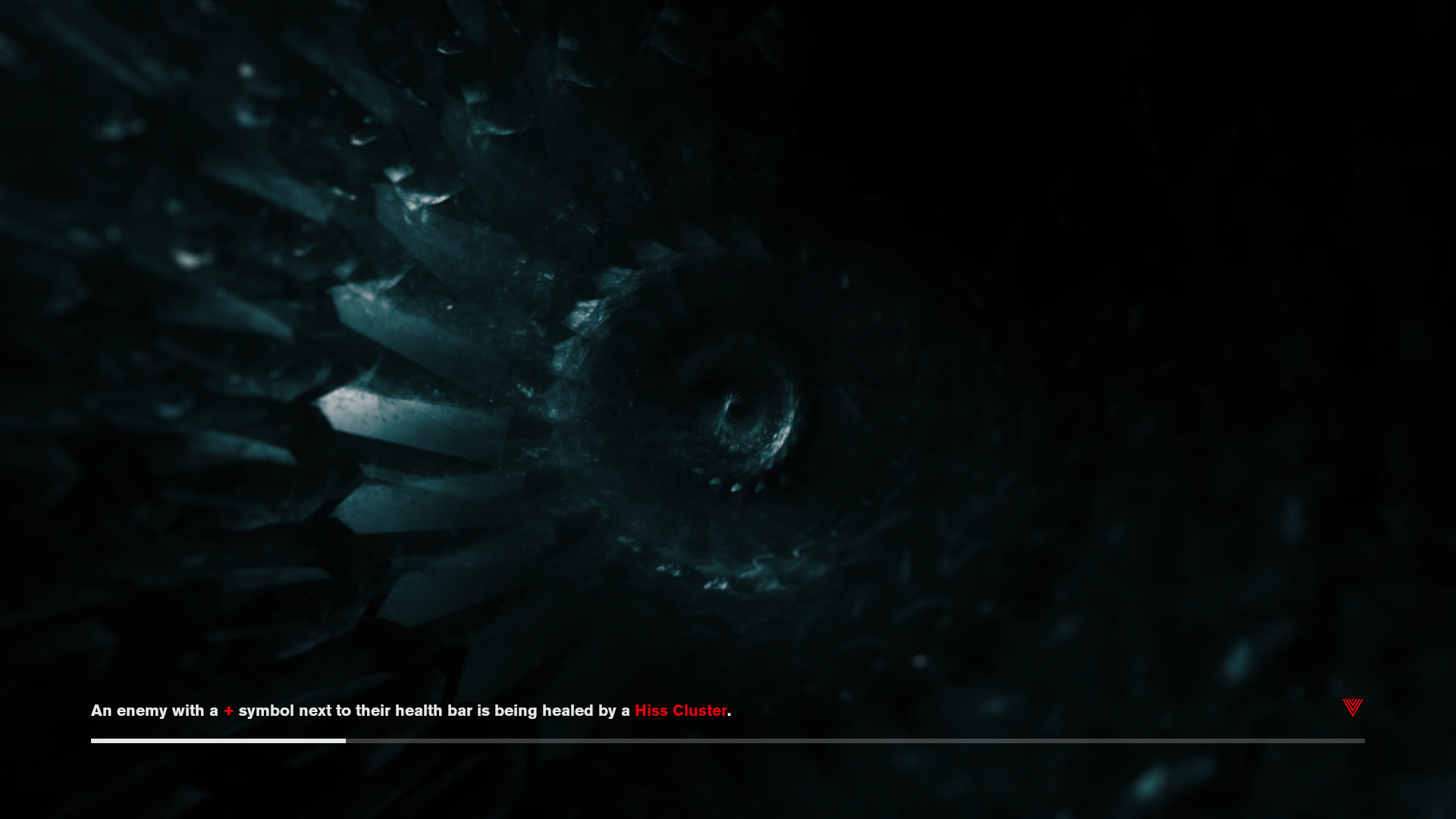
It is a simple yet aesthetically pleasing way to reinvent the losing screen. Both screens feature a load progress bar and tips, but with the mesmerising swirls that both The Hiss and Polaris create, I found myself looking at the graphics more than the tips or progression bar.
FAR CRY 6
Far Cry 6 takes the time to show the different regions of Yara. Whether via aesthetics or dialogue that explains how the three central areas function within the country, the loading screens reflect this when loading into the different regions. Each part has a distinct screen that displays the region's name, a location within that place and a collection of references.
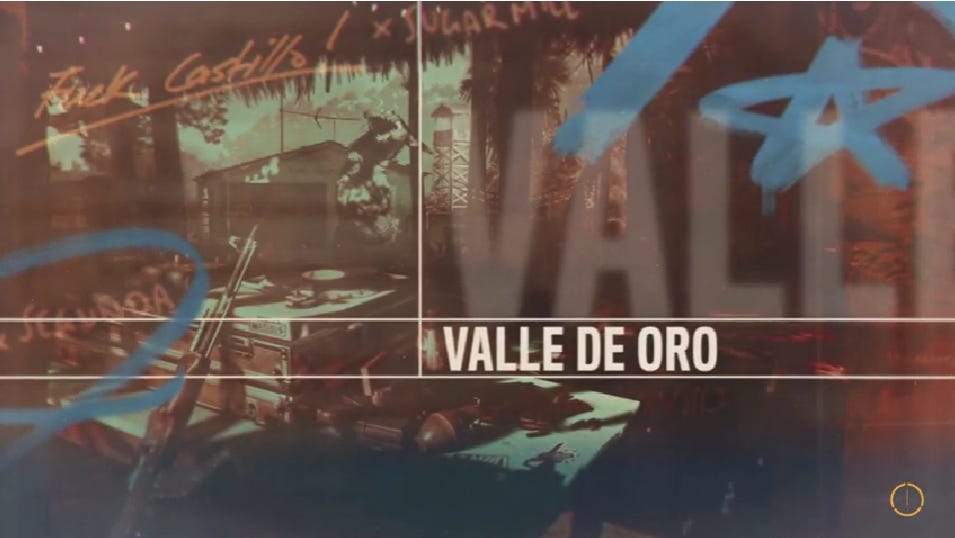
Valle De Oro, for example, has Camp Máximas in the background, with graffiti relating to both Libertad and Máximas Matanzas covering the screen. The screens shift and oscillate as they load, creating more visual interest in the intriguing scene.
EVOLVING
These loading screens evolve with the story as the player progresses through it.
SHADOW OF THE TOMB RAIDER
The eclipse is a central part of Shadow of the Tomb Raider. It drives Lara forward and is essential to the story. Unsurprisingly, the eclipse is featured in the game's stunning loading screens. Created by artist Ricardo Lima, the loading screens show the progression of the solar eclipse. The screens start with the sky bright and shining, and throughout the story, they transition into a total solar eclipse with darkness blanketing the jungle below.
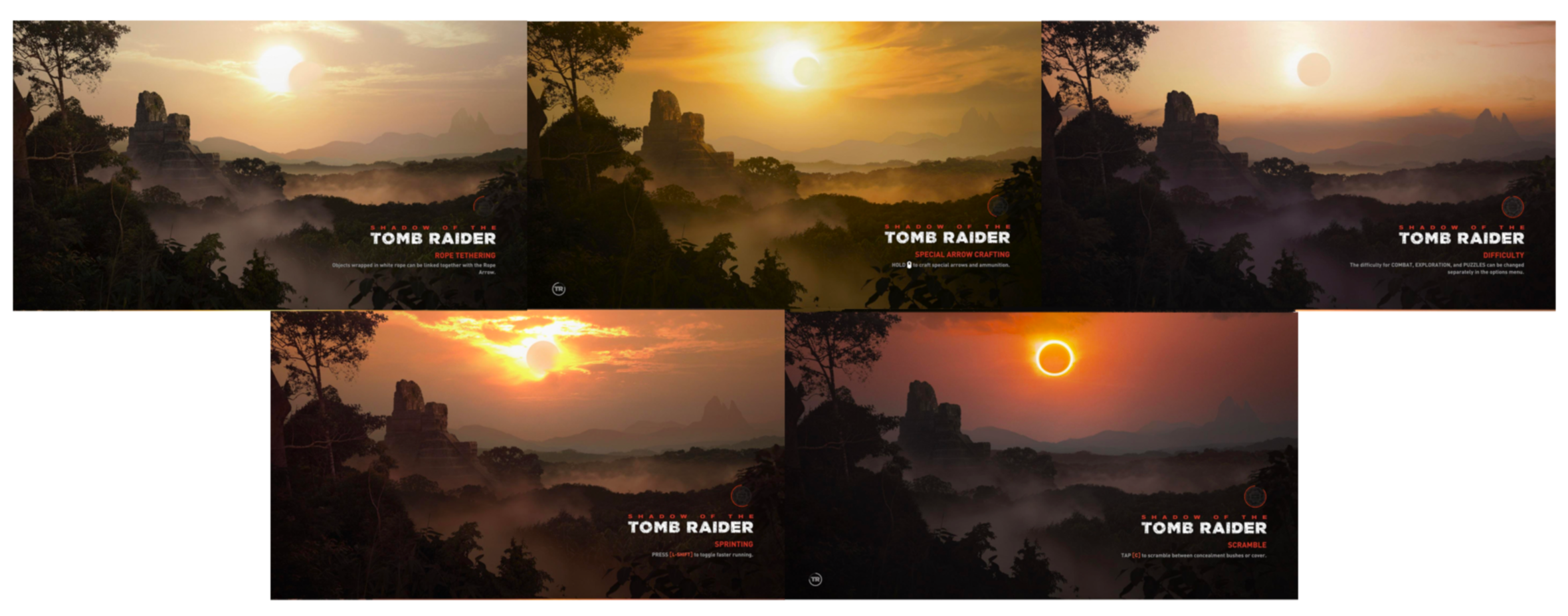
Not only do the screens evolve with the story, but they evolve with Lara, who, throughout the game—and to a more significant extent, the reboot trilogy—becomes a much darker individual. After the final quest is completed, the screens move in reverse. They become a lighter scene, mirroring Lara's journey to healing herself after another harrowing adventure.
ASSASSIN'S CREED ODYSSEY
One of the most iconic visuals in the Assassin's Creed series is the memory corridor loading screens. Being able to walk around an animus-like simulation has been a stable of every mainline game barring two titles. Assassin's Creed Odyssey reinvents the loading screen while staying on them to the game's aesthetics. At first, the loading screen appears to be a static image of the Pyramid Piece of Eden found in the Cult's lair.
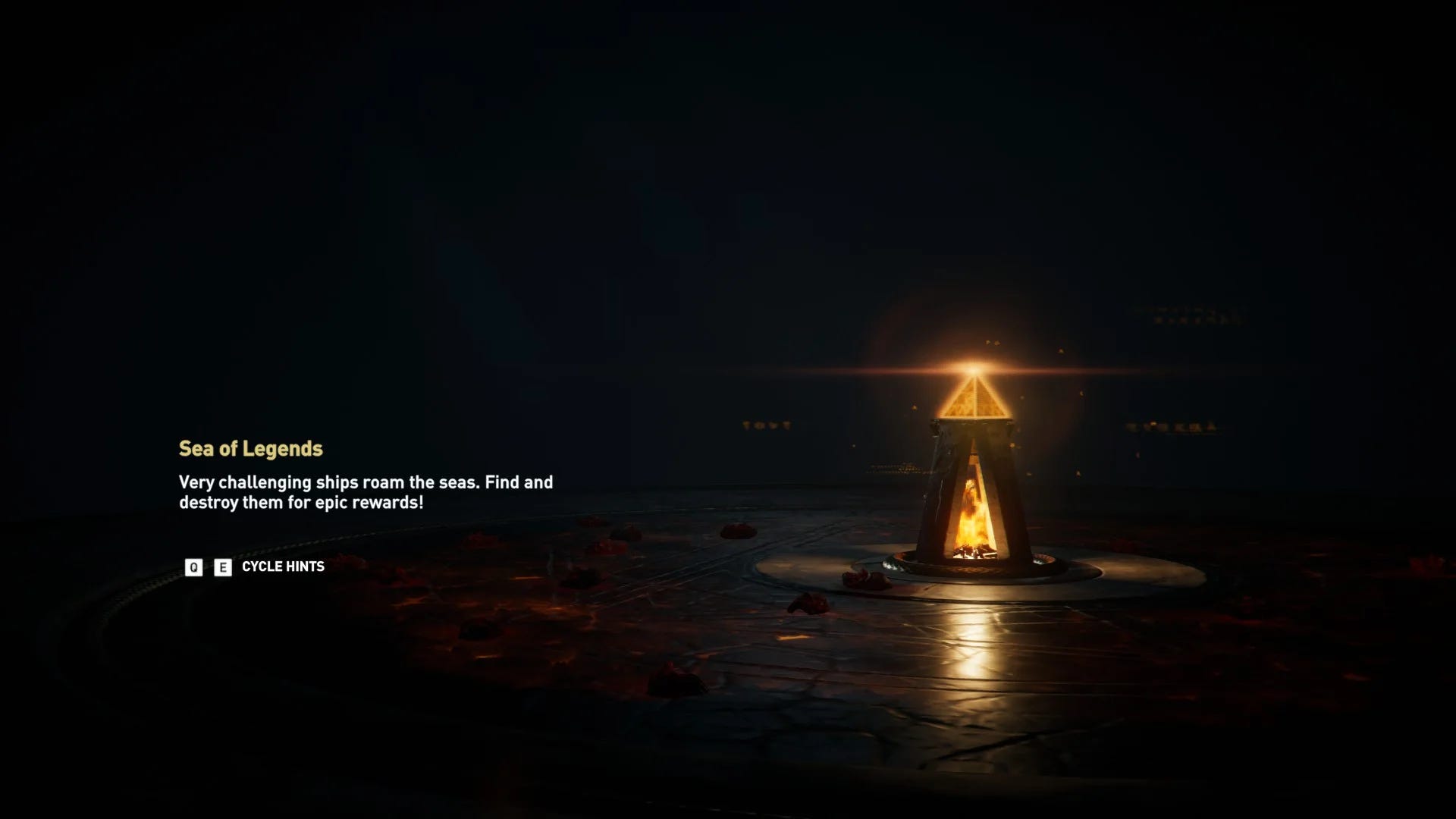
Nothing too special, but it sets the tone that the First Civilisation is at the core of this story. When Kassandra begins dismantling the Cult, the loading screen comes to life. Kill after kill, the loading screen slowly becomes filled with the bloody masks of the Cult. It's a subtle detail but adds much to an already lore-rich game.
ART
Though these loading screens are static, they show off some of the beautiful art created by artists who work on our favourite games.
DISHONORED 2
The Dishonored games are some of the most beautiful stylised games. Dishonored 2's loading screens change depending on the mission. The artwork serves as a background for the loading screens. Even though it's a background image, it is the central focus of the screen.
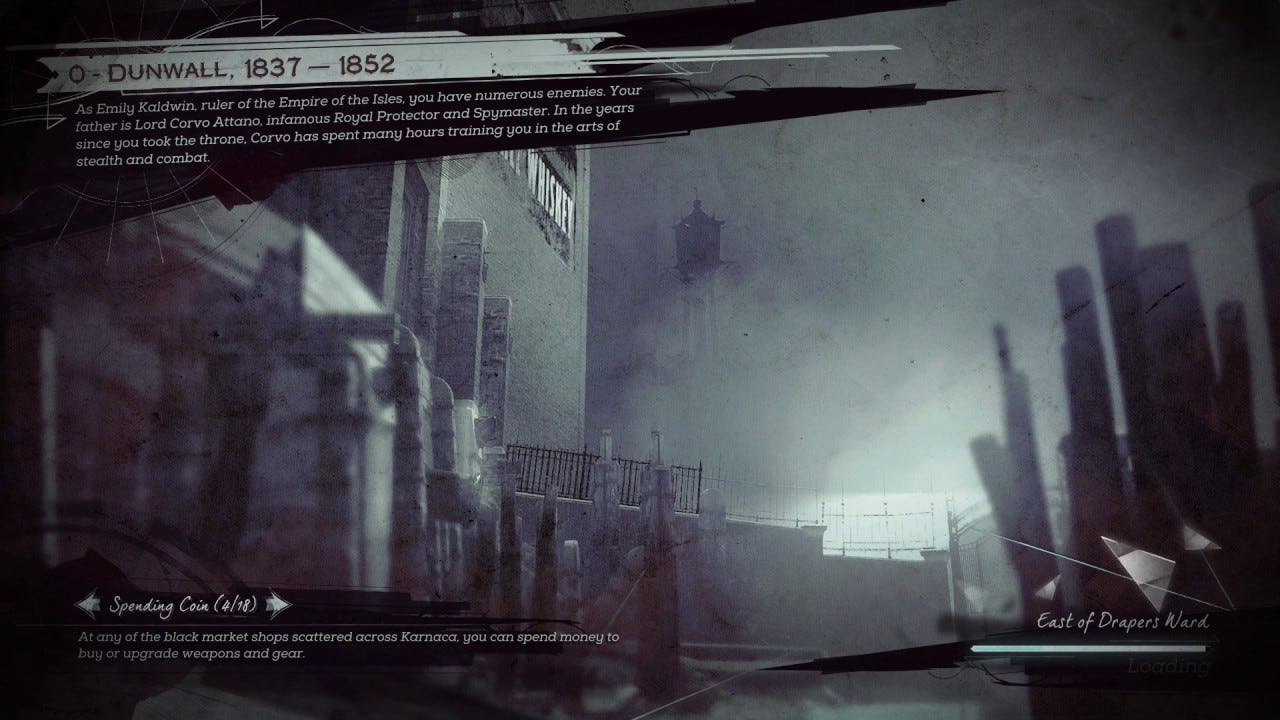
A small paragraph of lore relates to the mission and, in classic game fashion, a series of gameplay and world-related tips. Nicolas Petrimaux is the artist behind the loading screen works and many of the monologue and tutorial images. The limited colour palette and stylised environments make an unavoidable loading screen all the more enjoyable.
DISCO ELYSIUM
The loading screens of Disco Elysium are nothing short of stunning. The whole game is a beautiful kaleidoscope of colour and texture. Despite the sombre tone of the game, the visuals are beautiful.
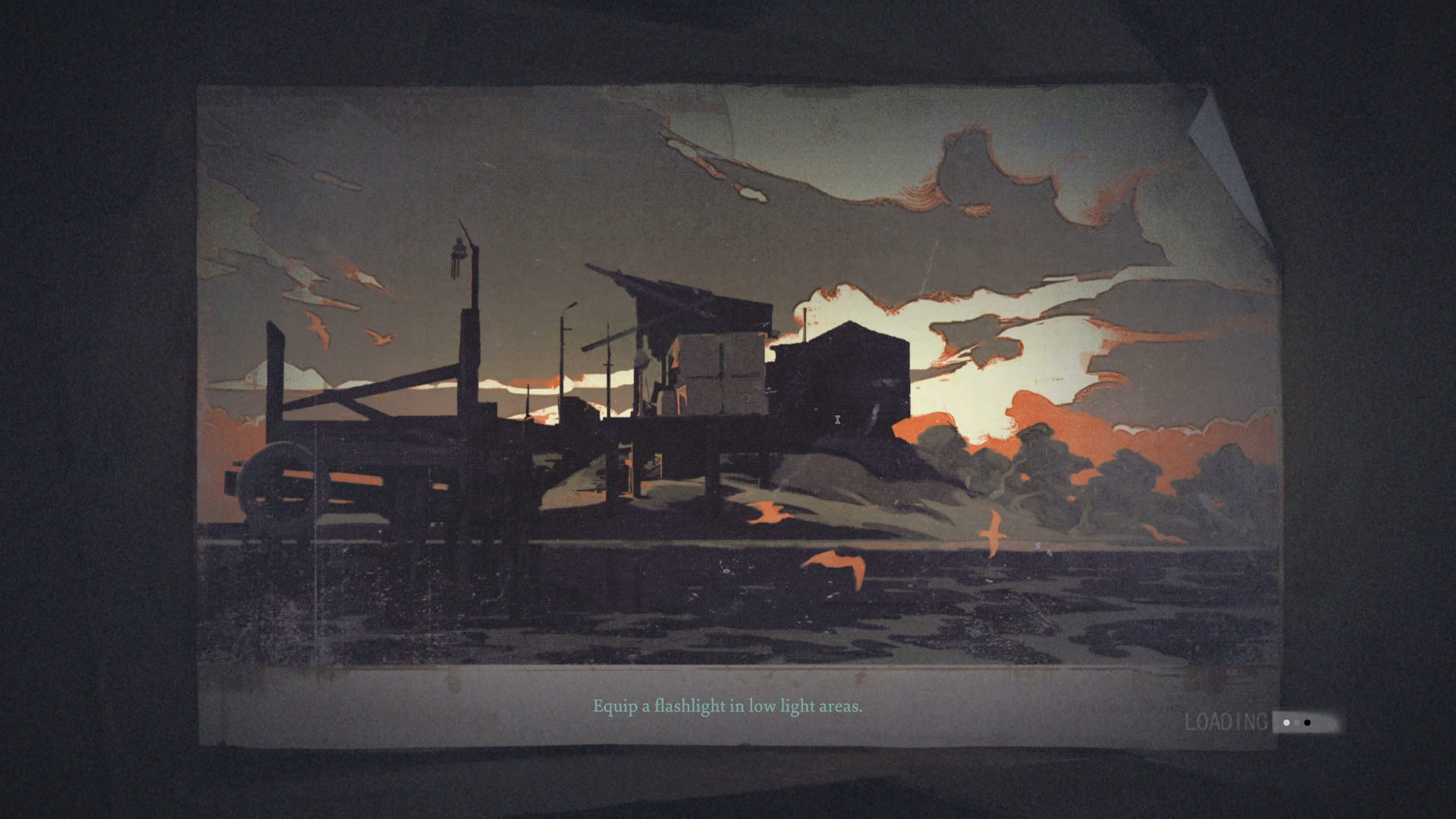
The loading screen is simple and stylish and takes on the appearance of an old photograph, with game tips gliding along the bottom of the screen. A core theme of Disco Elysium is identity and how it shapes us. With that in mind, it is fitting that the game's visual identity is chaotic and beautiful, just as life and identity can be.
With the development of technology, loading screens in the traditional sense will soon become a thing of the past, alongside physical game copies and the instruction booklets accompanying them. AAA games like God of War: Ragnarok has no loading screens in the traditional sense and instead use subtle 'load areas' like sliding through a gap in the wall or cutscenes to load the next segment of the adventure.
If you are interested in checking out more loading screens from various games, check out the Game UI Database! It was my primary source of visuals for this newsletter and is an excellent resource for artists, gamers and those with a curious spirit.
Like this newsletter? Consider subscribing! It’s free!